Current Quo vadis, Polish-German relations? On trust, tensions and a shared future
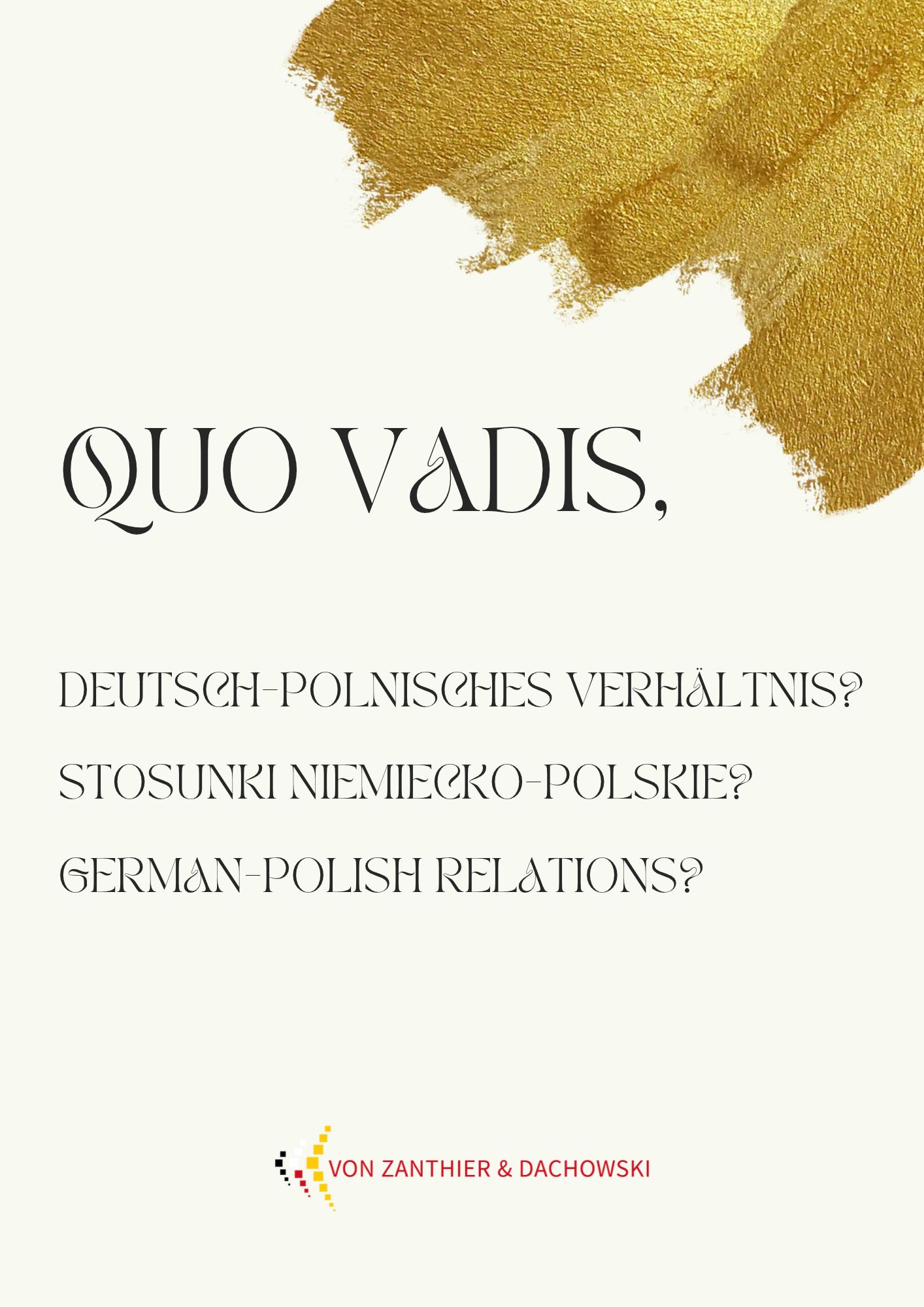
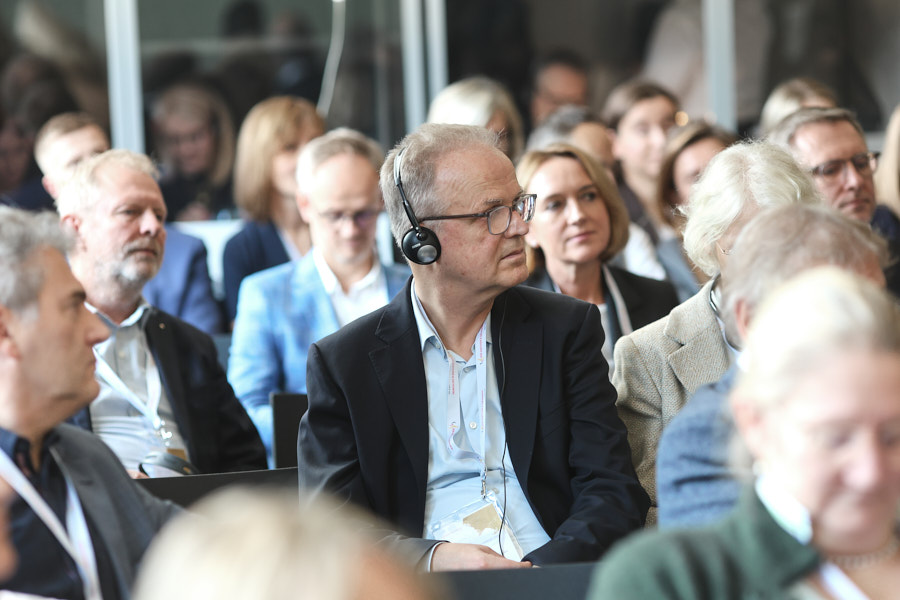
The event did not focus solely on past achievements. Trust, which enabled cooperation to develop after 1989, was one of the main themes, but so were questions about how lasting that trust will be. Participants discussed polarisation, different historical memories, a sense of losing control over one’s own life and tensions that could weaken cooperation on both sides of the Oder.
Trust built after 1989
Henning von Zanthier opened the conference. He recalled that Poland and Germany experienced an exceptionally good period between 1989 and 2013 in terms of freedom, security and prosperity. This period was supported by faith in European integration, democracy, the rule of law and economic growth. That shared outlook created the conditions for relations to develop between the two countries, their businesses and their people.
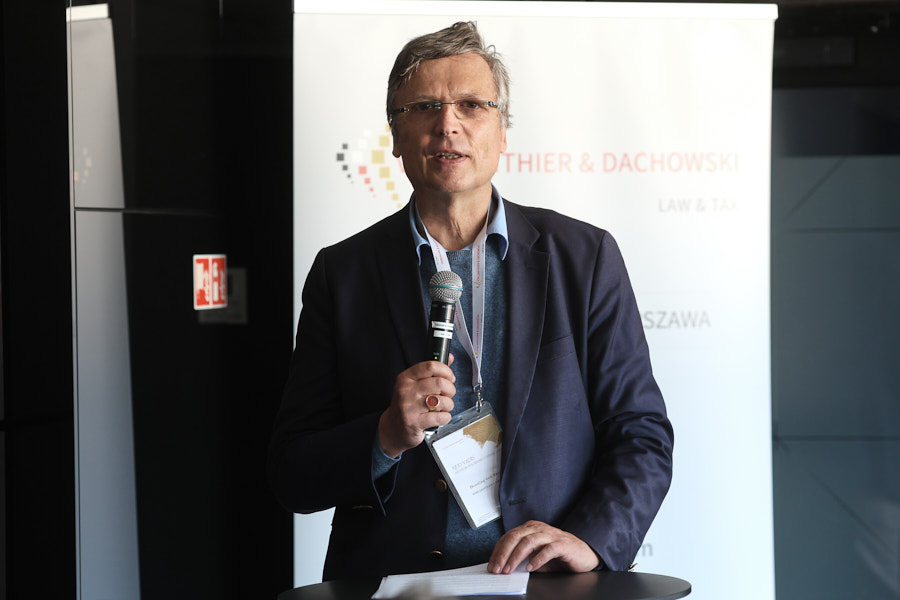
His first trip to Poznań in 1992 offered a personal example. A car breakdown turned a short visit into a four-day stay, giving him time to get to know the city and its residents. He remembered their kindness, energy and readiness to build something new. In 1995, he founded a law firm linking Berlin and Poznań with a Polish partner.
One of the stories that came to symbolise that period was that of a bus manufacturer which committed to building 50 buses before its factory was built or its employees were hired. The city and the banks had to trust that the company would deliver. The buses were built, and the company later became known as Solaris. For von Zanthier, the story shows how trust makes it possible to take risks and build lasting business ventures.
In the second part of his address, however, he raised a more difficult question: are that period of progress and the relationships built during it now under threat? He described a social shift in which many people increasingly feel they have less control over their own lives. Globalisation and the relocation of business activities can increase uncertainty among workers. Climate change, digitalisation and the development of artificial intelligence raise questions about the future and about jobs. Social media often rewards outrage and deepens divisions.
In von Zanthier’s view, these conditions encourage a turn towards identity-based and nationalist politics, as well as the exclusion of people with different views. He sees similar trends in both Poland and Germany. Retreating into one’s own group does not solve global problems such as inequality, the climate crisis, challenges related to AI or military threats. Joint action and dialogue are needed to help people regain a sense of influence over the future.
The history of relations has not been free of crises
Dr Christoph von Marschall argued that the Polish-German experience of 1989–2013 is difficult to treat as a model that can be applied universally. The conditions at the time were exceptional. There are still lessons to be drawn from what enabled progress: goodwill on both sides and a willingness to change one’s perspective.
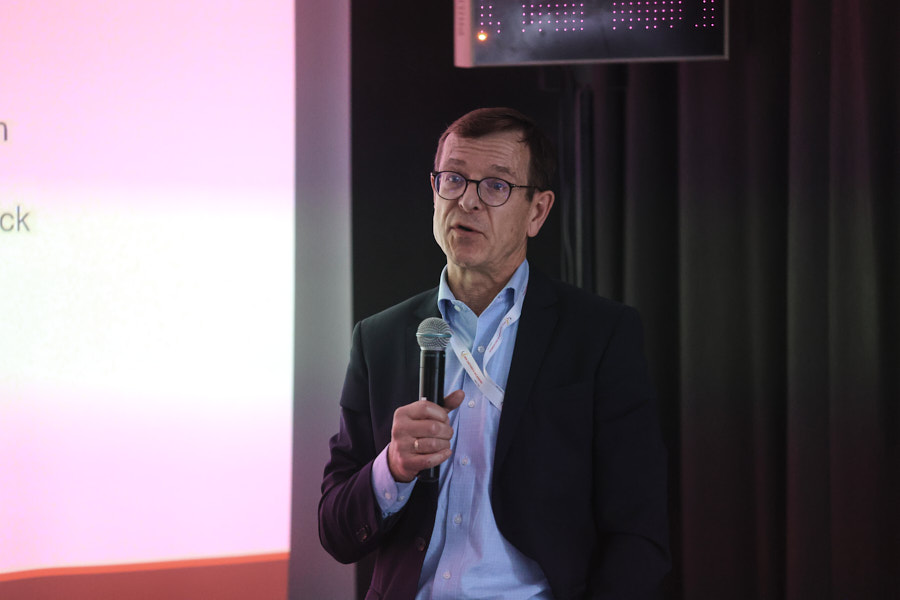
The “Solidarity” movement was one example. It changed how German reunification was viewed. For Poland, reunification could have posed a risk to the security of its western border. “Solidarity” helped shift that perspective and show how German unity could open the way for Poland’s integration with the West.
Marschall also recalled how easily trust could have been undermined. After the fall of the Berlin Wall, Helmut Kohl cut short his visit to Warsaw, while recognition of Poland’s western border remained a source of uncertainty for some time. Poland did not take part in the Two Plus Four negotiations, and the border treaty was concluded only after German reunification. These difficulties did not ultimately derail cooperation, but they show that good relations do not emerge automatically.
Economic cooperation brought tangible benefits and helped build connections. At the same time, Marschall noted that relations between countries are also shaped by disputes and differences in their interests. He pointed out, for example, that Poland’s warnings about Russia and energy dependence did not always receive due attention in Germany. He also argued that a country seeking European solutions must take its partners’ positions into account and adjust its own policies when it stands outside the shared consensus. Crises can lead to better cooperation when the parties learn from them.
People’s experiences and cooperation in everyday life
Henning von Zanthier moderated the discussion “Erlebnisberichte aus der polnischen Gründerzeit”. The speakers were Dr Antje Franz, founder of the German-Polish Lawyers’ Association and now a department head at the Bundestag; Hans-Jörg Otto, former managing director of El-Cab in Poznań; and Łukasz Dachowski, Partner at VON ZANTHIER & DACHOWSKI.
Dr Antje Franz spoke about studying in Poland and founding the German-Polish Lawyers’ Association in 1990. She recalled a time when much still had to be built from scratch and contacts between Polish and German lawyers were very limited. Her initiative aimed to make it easier for people to meet, exchange ideas and build professional networks. Looking at the present, she emphasised the importance of maintaining the existing ties in business, academia and other fields, particularly at a time of political uncertainty.
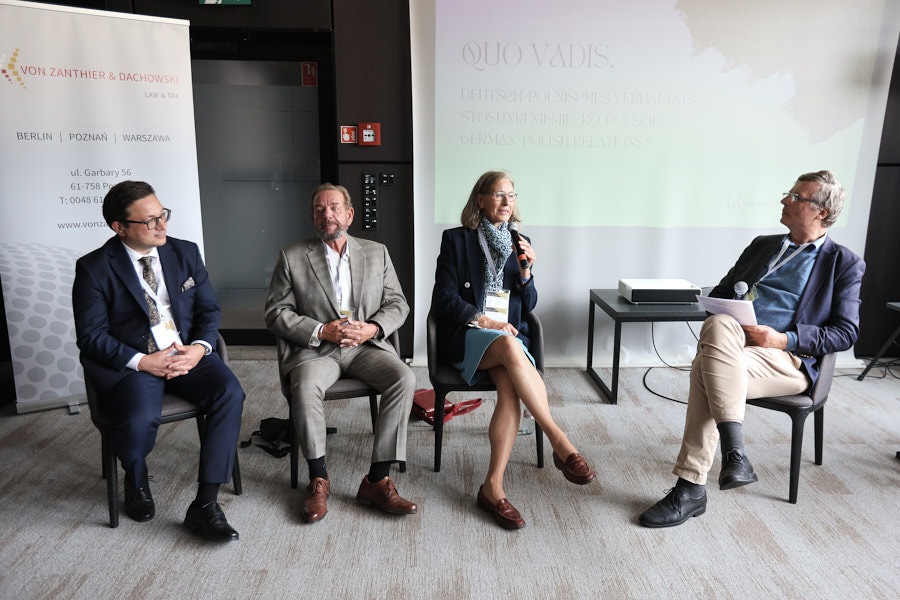
Hans-Jörg Otto came to Poland in the 1990s without speaking Polish to develop the company’s operations. He was warmly welcomed and soon saw how important it was to be present with his team. The company started with eight employees. Otto earned their trust by working on site and sharing the team’s day-to-day life. Over time, Poznań became his home. His story showed that business trust is built through responsibility and relationships between people as well as through contracts.
Łukasz Dachowski spoke about cooperation from the perspective of a lawyer and businessperson. He noted that the Polish market has matured: German companies now look to Poland for partners, new opportunities for growth and customers, rather than solely for lower labour costs. At the same time, he pointed to a gap between the steady development of economic and social ties and a more tense political debate. He spoke about Germany being used in Poland’s domestic political debate and the need for more substantive dialogue between governments that also takes the Central European perspective into account.
Disputes about the past and the question of responsibility
Prof Benjamin Lahusen, a lawyer and legal historian at the European University Viadrina, analysed Polish claims against Germany. He distinguished between inter-state reparation claims and the question of compensation for individual victims. He discussed post-war arrangements and the subsequent practice of both countries. In his view, the legal basis for reparation claims is weak, while the level of support provided to Polish victims remains an important political and moral issue.
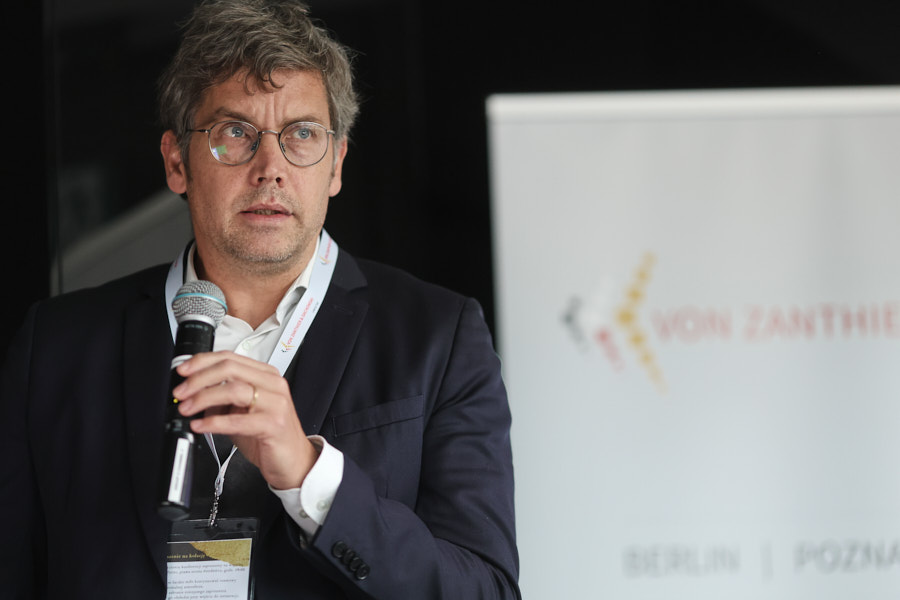
His address showed that the dispute cannot be reduced to a single sum or a single legal answer. It is shaped by different interpretations of history and a sense of injustice. These questions can also be used in political debate to deepen divisions. Lahusen pointed to future-oriented initiatives, including academic exchange, meetings between young people, language learning, joint historical research and cultural projects. He also highlighted the Viadrina as an institution that educates people who can promote understanding on both sides of the border.
Mutual understanding and joint action in Europe
Róża Thun, a former Member of the European Parliament, spoke about improving Polish-German relations within the European Union. She highlighted the different historical experiences of the two societies. In Poland, the war and its consequences were present in family memories and education in ways that differed from Germany. These different memories continue to shape emotions and mutual expectations, yet they are still too rarely discussed openly.
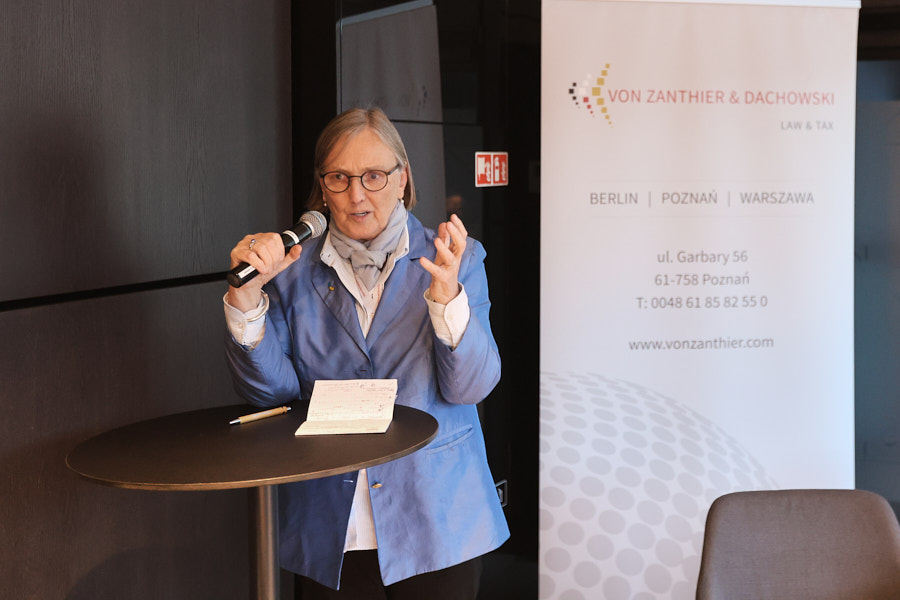
Thun stressed that relations should not be reduced to financial matters and that history should not be used to fuel divisions. She highlighted the importance of youth exchanges, civil society organisations, academic programmes and contacts between families. These experiences often help younger generations approach cooperation more naturally. She also warned about online disinformation, hate speech and Russian influence, which can deepen divisions within societies. Poland and Germany should respond to these threats together and cooperate on security and climate issues.
The discussion “Polish-German relations in the EU: Do we need a rules-based vision?”, moderated by Henning von Zanthier, brought together Róża Thun, Dr Christoph von Marschall and Michael Konopka of the Warsaw-based initiative NowaMewa. They discussed how shared European principles could be combined with practical action. Topics included defence cooperation, support for Ukraine, Europe’s ability to respond to threats and how cooperation within the EU and NATO can be developed further.
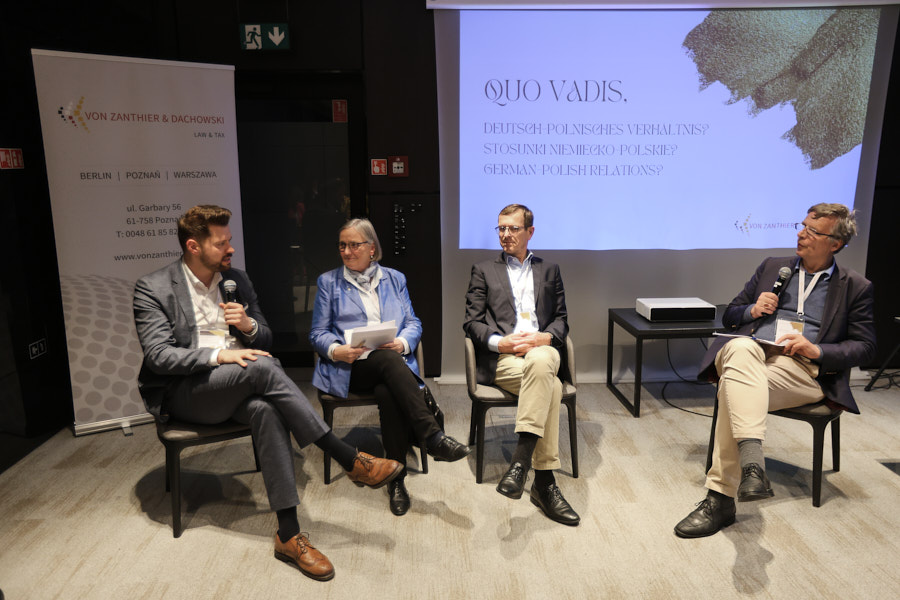
Marschall emphasised the value of practical steps that build confidence in one another as reliable partners. Thun stressed that cooperation between Poland and Germany should be part of broader European action. Michael Konopka brought the perspective of a younger generation and spoke about initiatives that connect Polish and German communities, including in business. Meetings and joint projects help people understand each other’s everyday experiences and break down barriers. The discussion also showed that views differ on many issues and that cooperation requires a willingness to address those differences openly.
Relations require ongoing work
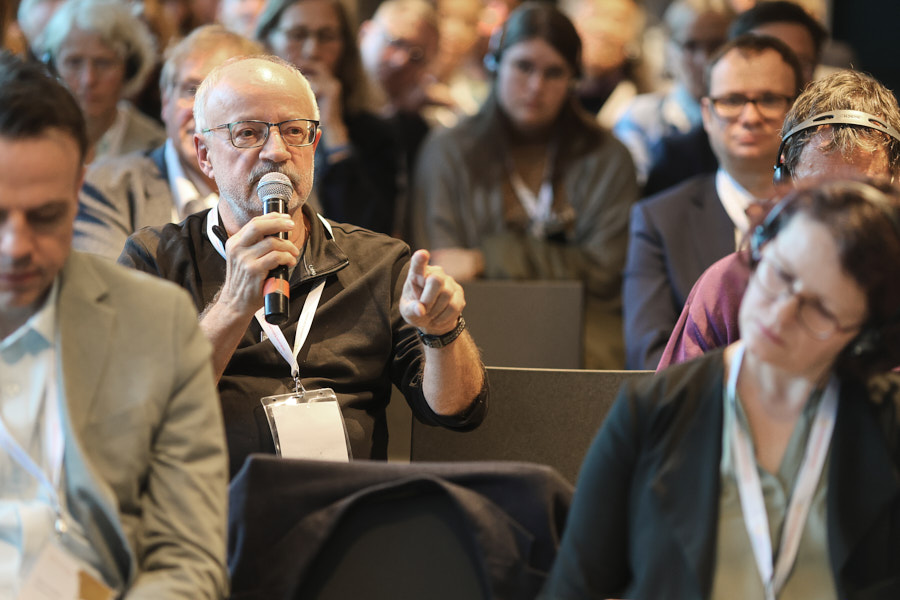
The conference did not present Polish-German cooperation as a process free of conflict. It highlighted its achievements as well as tensions that cannot be resolved simply by invoking shared history or economic interests. During the open discussions, participants spoke about different historical memories, policy mistakes, mutual grievances and growing polarisation. One important conclusion was that avoiding difficult subjects can leave room for oversimplification and the political use of history.
Galerie
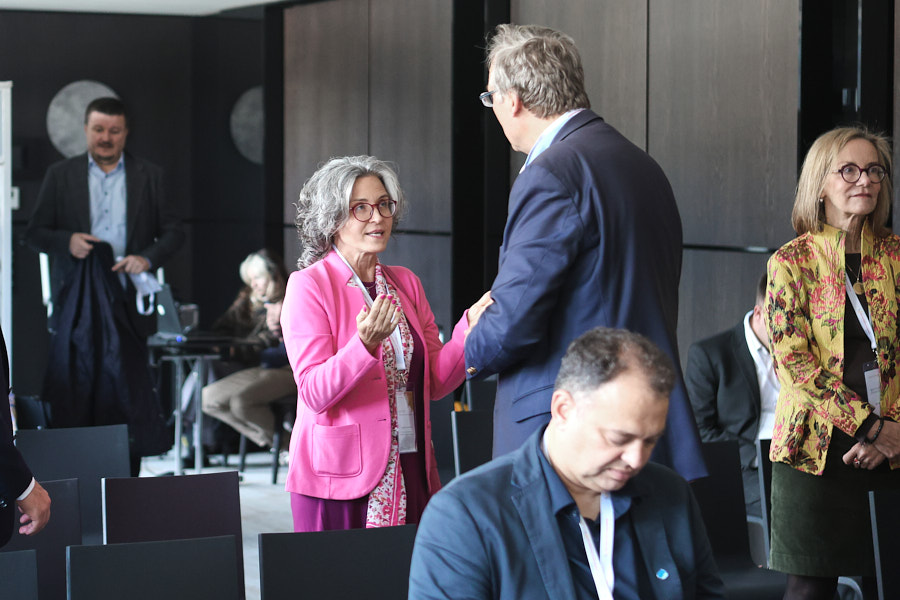
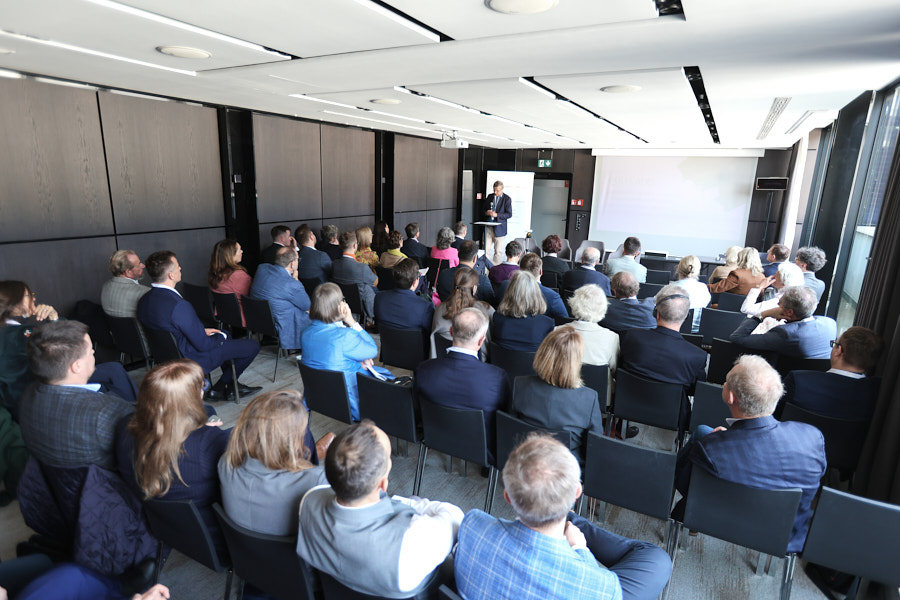
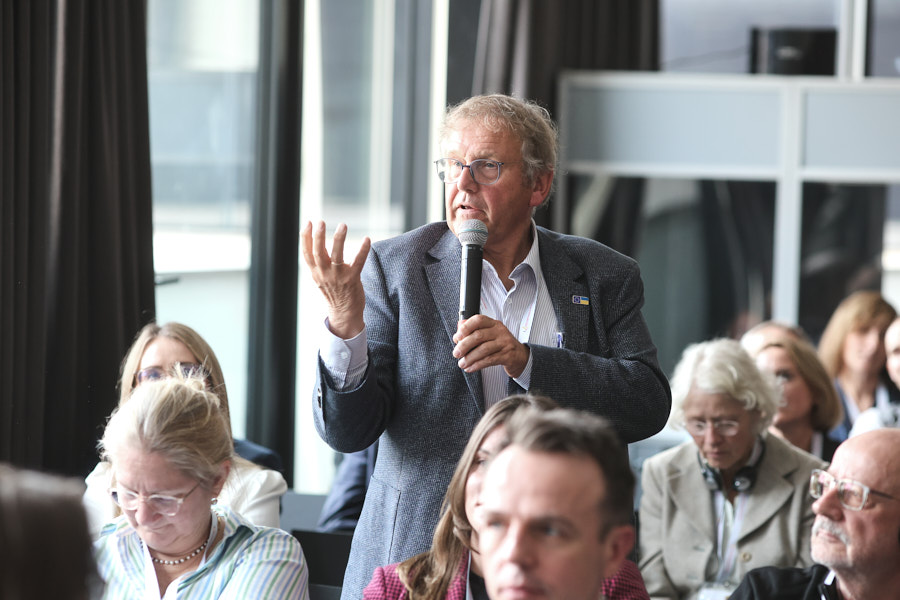
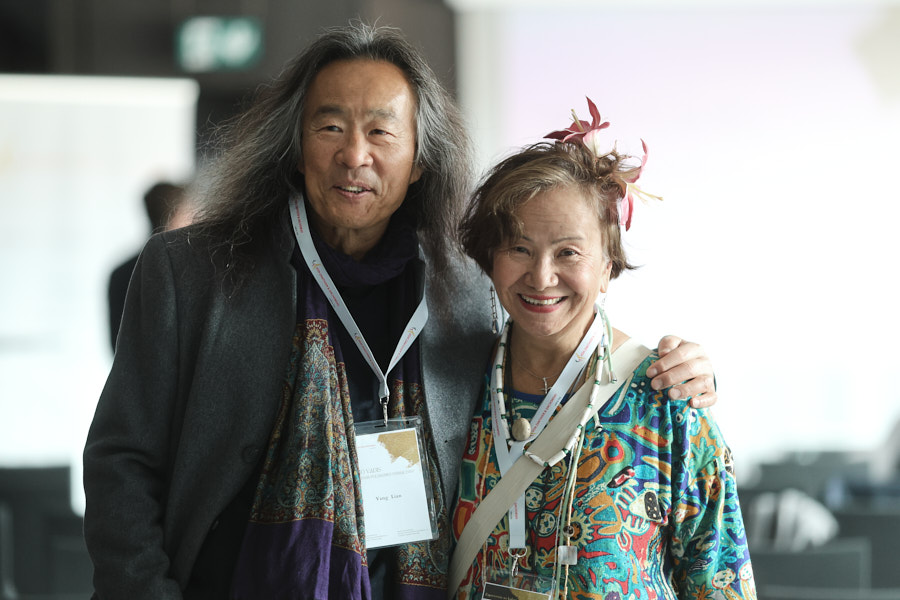
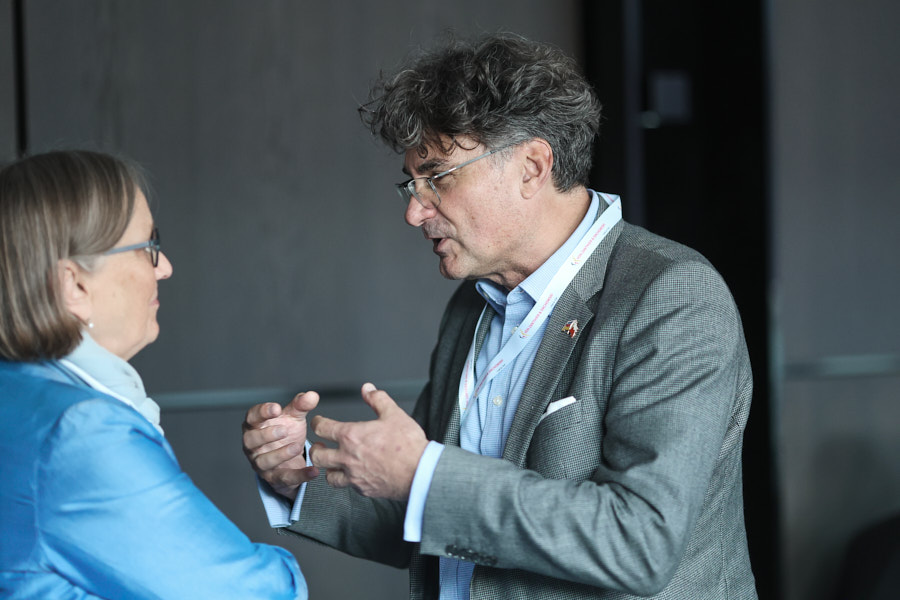
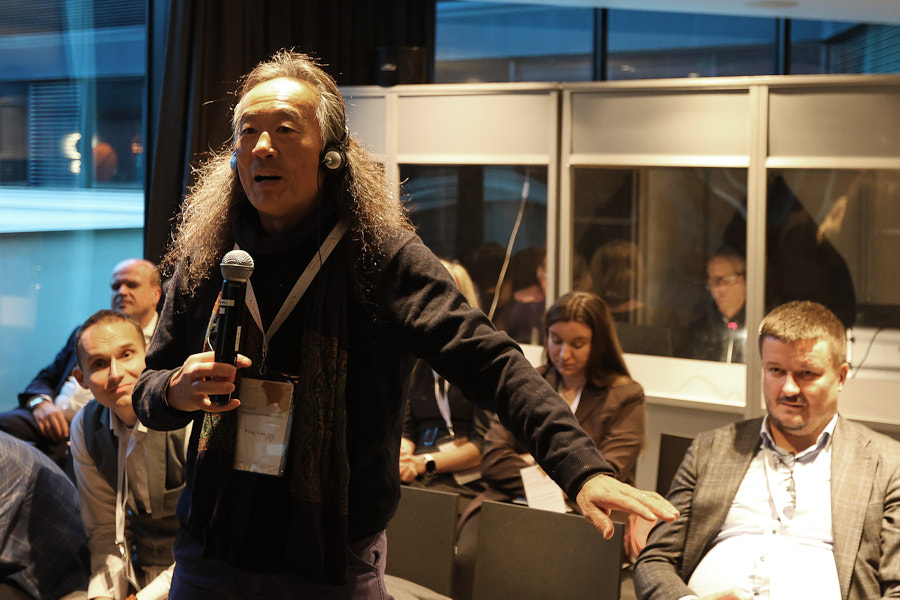
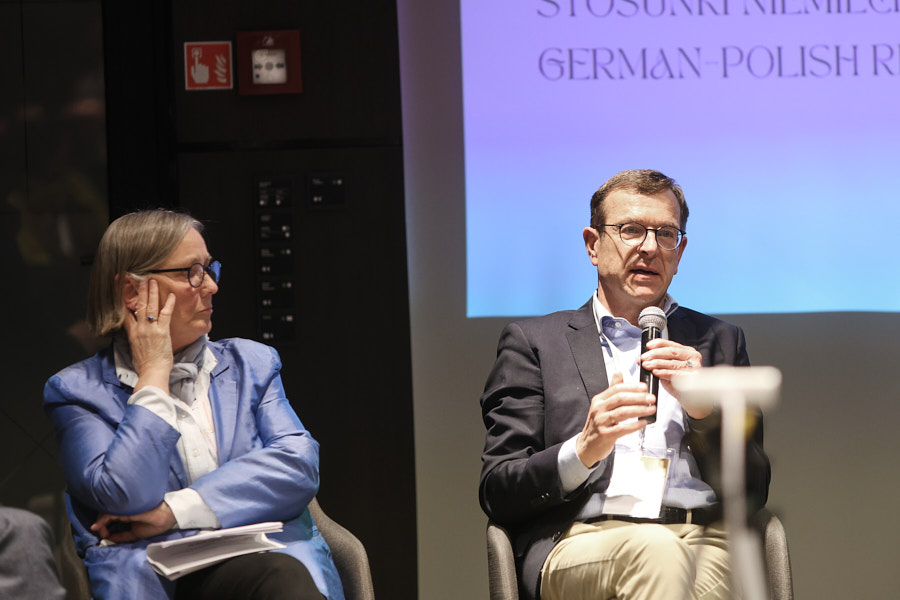
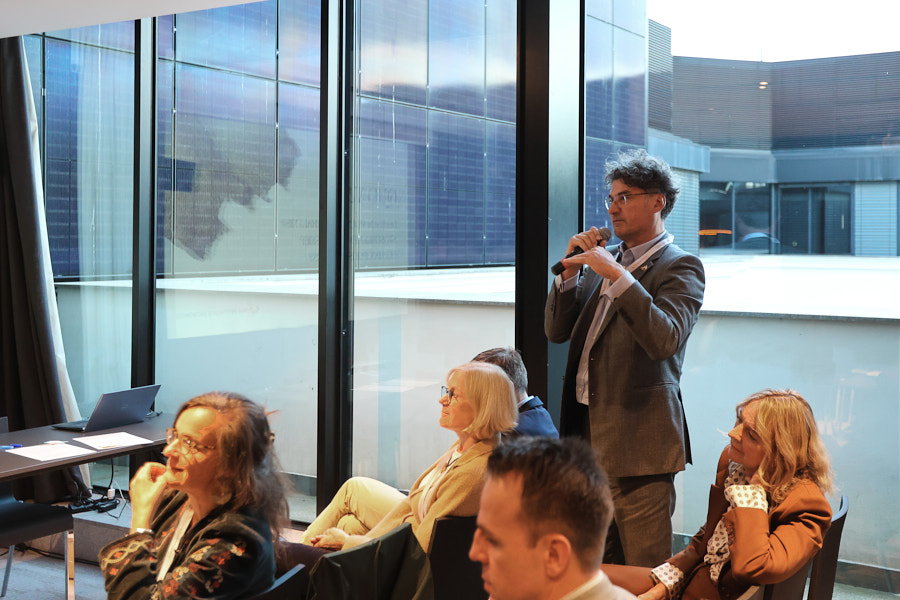
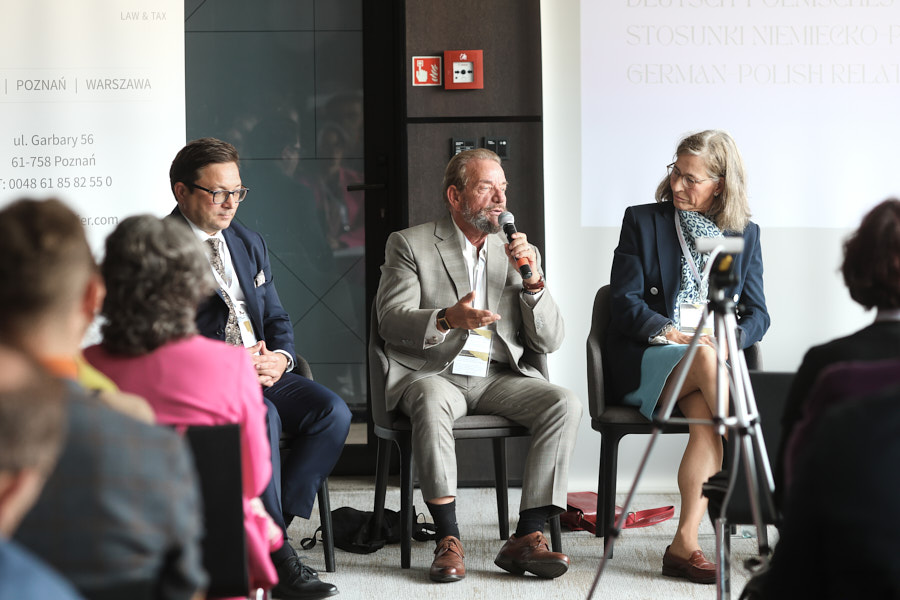
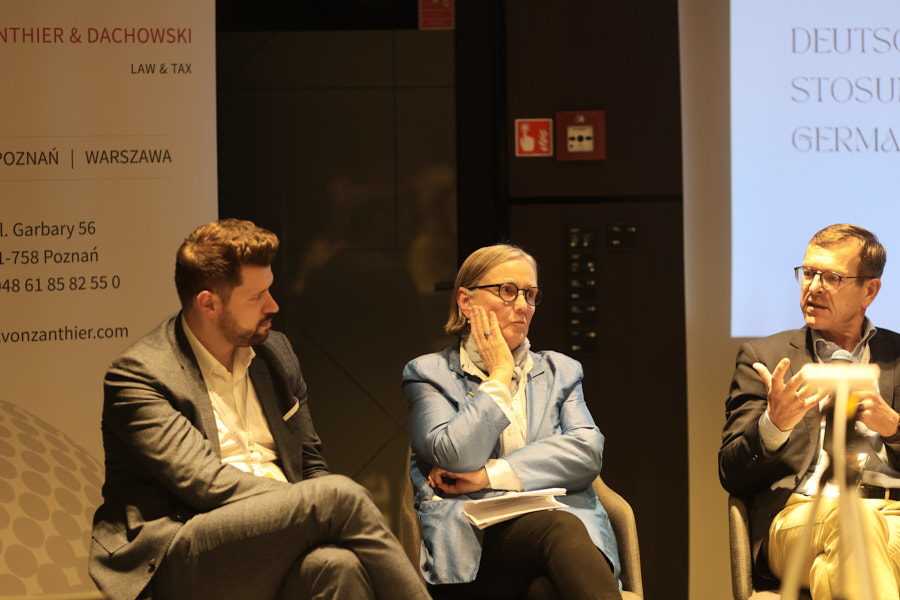
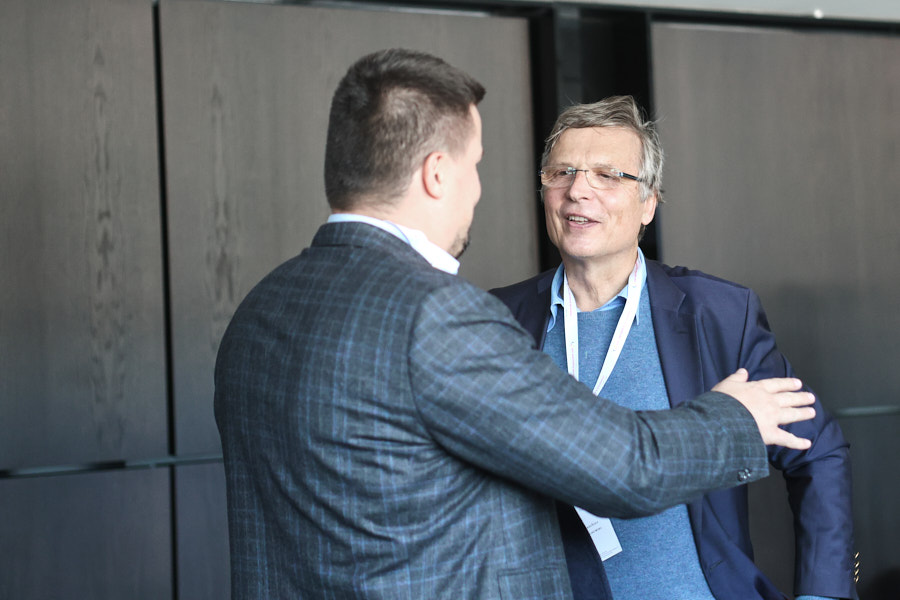
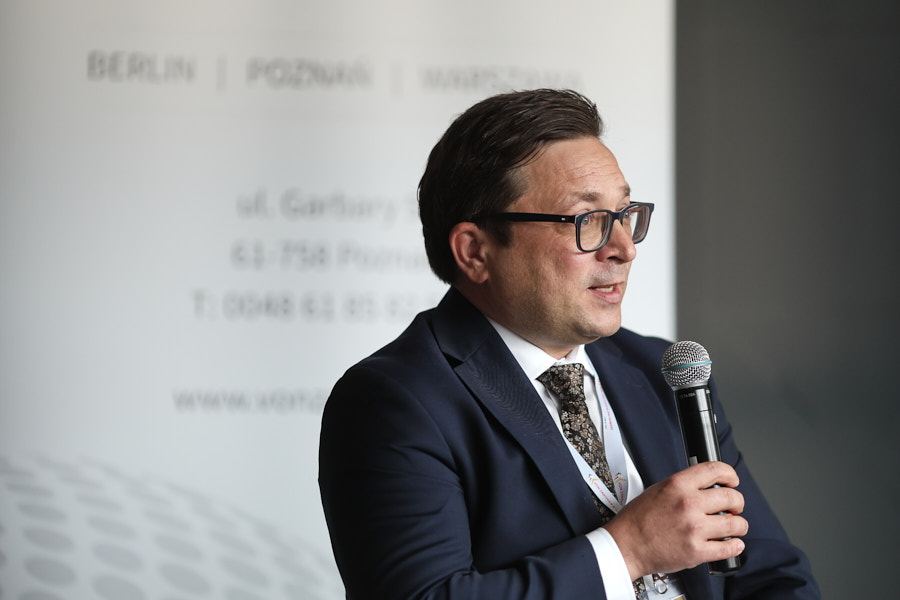
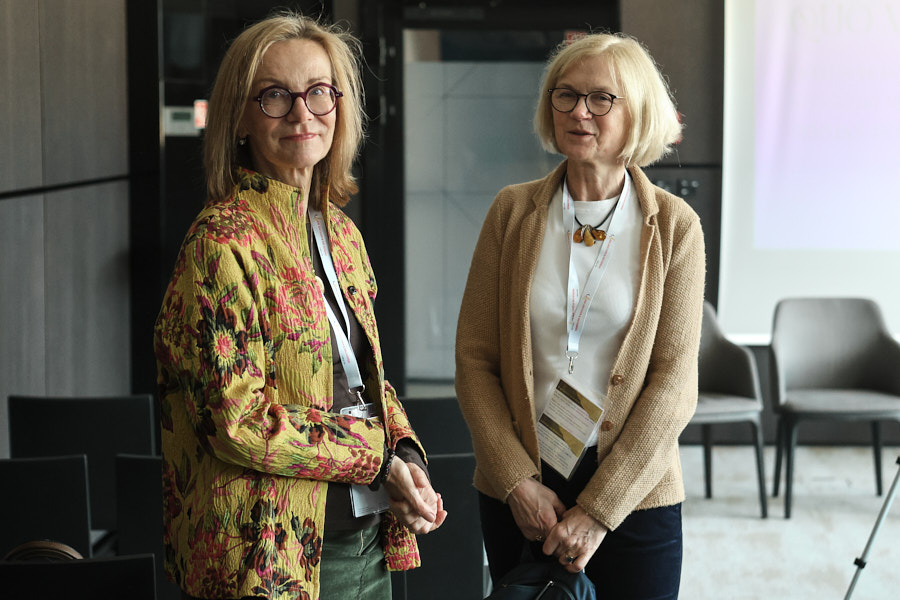
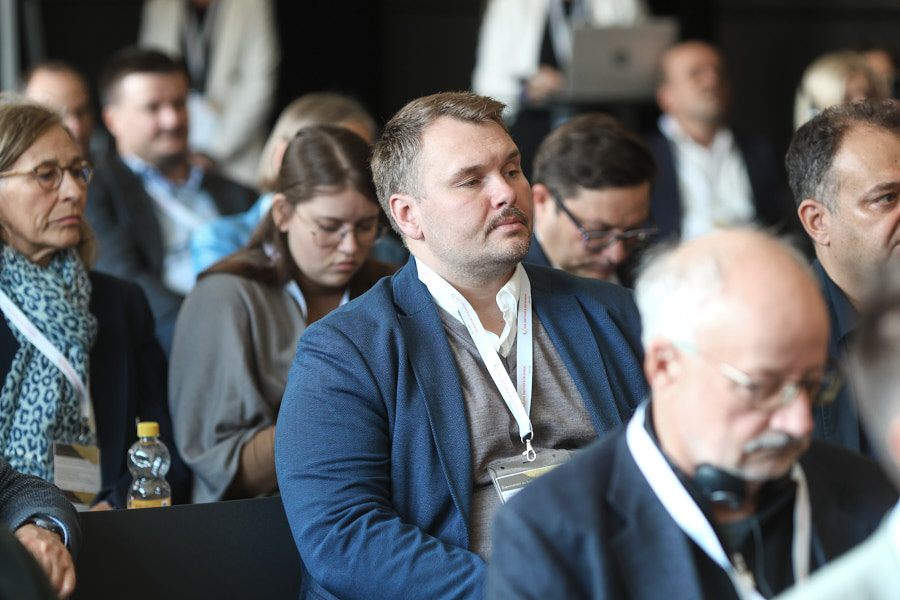
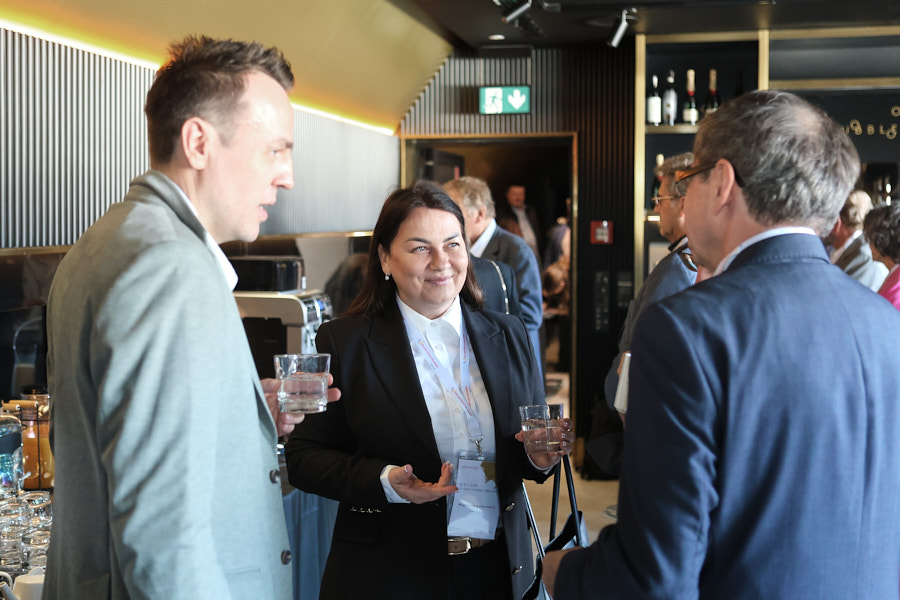
At the same time, personal memories and business experience showed what everyday cooperation can achieve. Companies, institutions, civil society organisations, universities and personal contacts form a network that helps sustain dialogue even when politics becomes a source of tension. Polish-German business, built on trust and shared interests, remains one of the important practical pillars of good relations between our countries. It cannot replace political dialogue, but it can provide that dialogue with a lasting social and economic foundation.
For many years, VON ZANTHIER & DACHOWSKI has supported clients operating in both countries, combining knowledge of the Polish and German markets with expertise in their respective legal systems. The conference provided an opportunity to discuss how this cooperation can be developed further at a time that calls for both trust and the courage to address difficult issues.