Investments in renewable energies Grid Connection First – Grid Connection Conditions, Deadlines and Technical and Contractual Safeguards
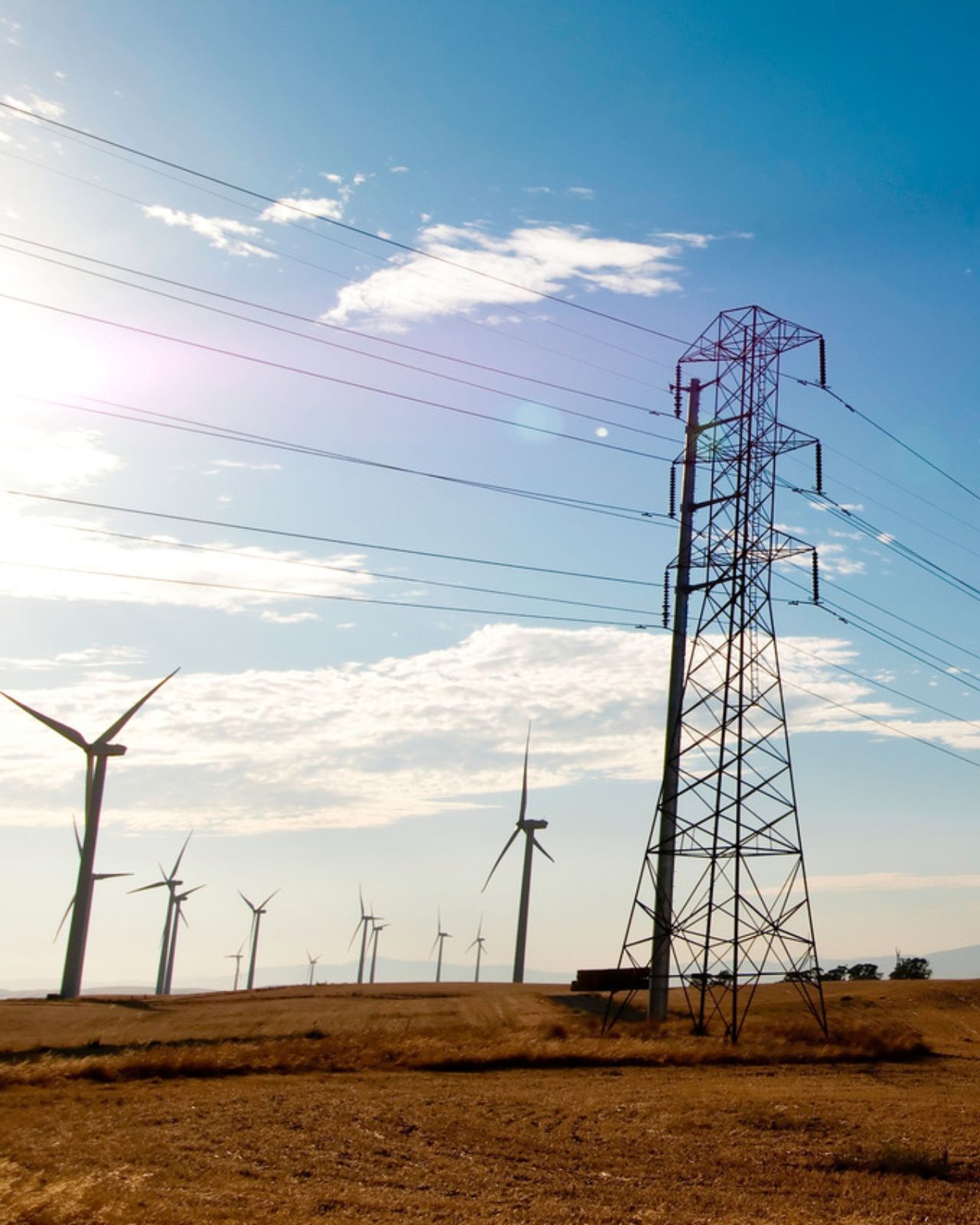
Grid Connection First: Why Access to the Grid Is Today the Most Significant Constraint on Wind Power Projects
For the management board planning an investment in onshore wind energy in Poland, one figure says more than lengthy analyses: in 2025, grid operators issued 4,897 refusals to connect, covering a total capacity of approximately 107 GW. Today, it is neither the wind nor the land, but the grid that determines whether a project will be developed. The amendment to the Energy Law, which largely entered into force on 30 April 2026, changes the rules of the game: it increases the cost and risk of entering the procedure while offering new, flexible connection models in return. For investors, this means a fundamental change in approach – grid connection capacity is no longer a resource that simply needs to be secured; it is also necessary to demonstrate that the project is ready to use it.
The Problem the Reform Aims to Solve
For years, limited grid connection capacity was blocked by investments that never entered the implementation phase – so-called “zombie projects”. They reserved grid capacity without building anything. The new regulations target this mechanism precisely: they shorten deadlines, introduce mandatory security requirements and establish the principle that capacity should be reserved by those who are genuinely ready to build. For management boards, this means that the grid connection process is no longer a formality handled by the technical department – it becomes the central element of the entire investment schedule and financial model.
The Application as an Investment Decision, Not a Market Test
Submitting an application for grid connection conditions is no longer an inexpensive way to “test a location”. For connections to grids above 1 kV, the investor pays a non-refundable fee of PLN 1/kW (maximum PLN 100,000) and an advance payment of PLN 60/kW (maximum PLN 6 million). For a 50 MW wind farm, this means a fee of PLN 50,000 and an advance payment of PLN 3 million, both paid at the very outset. An application submitted without secured land rights, an assessment of planning and environmental conditions, and carefully considered capacity and voltage parameters means not only sunk costs but also prematurely starting the clock before the project is sufficiently mature.
Two Clocks That Determine the Fate of the Project
The entire time discipline of the process revolves around two deadlines, the failure to meet which results in the loss of access to the grid.
The first clock – one year to conclude the agreement. New grid connection conditions are generally valid for 12 months from delivery; within this period, a grid connection agreement must be concluded. Conditions issued before 30 April 2026 retain the more favourable two-year validity period. One year can be a short period if the installation needs to be redesigned or technical parameters need to be agreed with the operator.
The second clock – the building permit. From the conclusion of the agreement, the deadline for obtaining a final building permit begins to run: 36 months for wind turbines and 24 months for PV installations and energy storage facilities. In the case of wind power, the permit must allow the construction of at least 80% of the capacity covered by the agreement. Failure to meet the deadline results in the agreement expiring by operation of law, even if the project is already at an advanced stage.
There is a safety valve: a one-off extension of up to 24 months, conditional upon submitting an application before the deadline expires and providing additional security. From the management board's perspective, however, this should be treated as a reserve for exceptional circumstances rather than part of the standard schedule.
Frozen Capital: Security That Must Be Factored In Early
In addition to the initial fees, security for the performance of the agreement is required – PLN 30/kW for the first 100 MW and PLN 60/kW above that threshold, up to a total of PLN 12 million, generally to be provided within 14 days of concluding the agreement. The form of security can be selected (cash deposit, bank or insurance guarantee, or, subject to certain conditions, a guarantee from the parent company), but failure to provide it on time again results in the agreement expiring by operation of law. For the financial model, this means a real freezing of funds or guarantee limits at the most uncertain stage – which is crucial in RTB transactions, where the value of the grid connection agreement must be assessed together with the remaining time to obtain the building permit, the form of security and the consequences of a change of investor.
Connection with Restrictions: An Opportunity That Can Become a Bankability Trap
In return for the stricter requirements, the reform offers two new models. A flexible agreement allows an installation to be commissioned before the planned grid expansion is completed, in exchange for temporary restrictions – for no longer than three years from completion of the facility, while the operator remains obliged to expand the grid. A configurable agreement comes into play when an unrestricted connection will not be possible even after expansion; the restrictions may be variable, dependent on grid operation and other installations, and may even be indefinite, without any obligation on the operator to remove them.
There are two risks here that the management board must clearly recognise. First, there is no legal claim to the conclusion of such an agreement – the operator decides whether to offer it, which is why both models should be expressly requested, supported by a prepared technical justification. Second, the regulations do not provide for automatic compensation for energy that cannot be injected into or drawn from the grid as a result of the restrictions. The possibility of connection is therefore not the same as bankability. Without guaranteed minimum capacity, transparent and verifiable rules for activating restrictions, and a reasonable allocation of risk, the investor must translate the restrictions into the production profile, the number of curtailment hours, revenues, PPA assumptions and the bank's requirements – and only then assess whether the operator's “yes” is really better than its “no”.
Recommendation for the Management Board
Grid connection should be treated as an integral part of the investment strategy, not as a separate technical procedure. In practice, this means: conducting a grid analysis already at the location selection stage, consciously choosing when to enter the procedure, maintaining discipline regarding both clocks and time reserves, and continuously monitoring the administrative process and the operator's work. The new regulations will not build a single new power line or transformer, but they may finally ensure that limited capacity is allocated to projects that are genuinely ready for implementation. Investors who treat grid access as a top-level strategic decision, rather than a box to tick, will gain a competitive advantage.
Would you like to learn more about grid connections?
Meet us at Windenergietage 2026. On 11 November 2026, from 3:00 p.m. to 6:00 p.m., Justyna Loretańska, Henning von Zanthier and Jakub Wysocki will be available to answer your questions at our thematic table:
“Polish wind energy: legal, tax and market-entry considerations for German investors”
We will be pleased to discuss the acquisition and development of wind energy projects, greenfield investments, repowering, joint ventures, and the legal and tax framework for investing in Poland.