
Investments in renewable energies Offshore Wind in Poland: VAT Compliance for a Foreign Contractor - Case Study
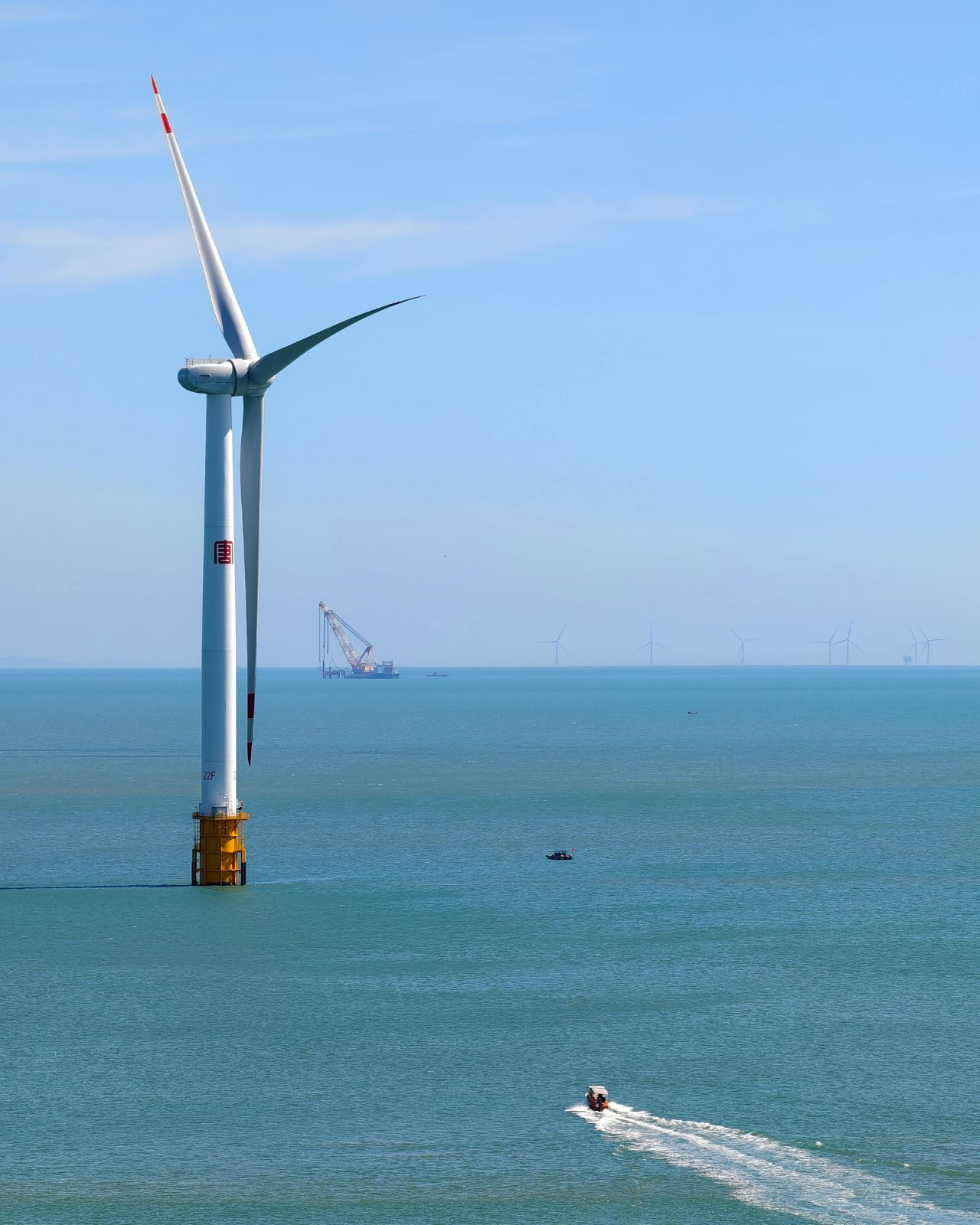
Below, to illustrate typical challenges, we present a hypothetical case study based on the most common operating model in offshore: cross-border supplies (from the EU and from outside the EU), a port-side warehouse, installation works and an extensive network of local subcontractors.
Facts of the case
The German company WindWorks GmbH begins performing a contract for the Polish special purpose vehicle Offshore Project SPV sp. z o.o., responsible for an offshore wind project in the Baltic Sea. The agreement covers deliveries of components (cables and accessories) as well as installation works and technical supervision over a period of several months. Some components are to be delivered to Poland from other EU countries and some from outside the EU. Logistics are structured so that receipt, transshipment and preparation of deliveries for further works will be organised in the vicinity of a port in Poland. The contractor maintains a stock of components in Poland to reduce the risk of delays on-site and to ensure service readiness.
During performance of the contract, events typical for high-dynamics infrastructure projects occur: urgent deliveries of consumables within Poland, replacement of elements, logistical adjustments, and broad engagement of local subcontractors (transport, port services, cranes, HSE support (Health, Safety & Environment), auxiliary works). The contract is settled in stages and linked to testing and acceptance, which in practice means intensive work on protocols and documents confirming completion of successive parts of the scope.
Where do VAT issues most often arise in offshore wind?
VAT registration in Poland: the question that always comes back
Foreign contractors often start from the assumption that settlement under the “reverse charge” mechanism at the customer level will be sufficient. This assumption can be risky, because the operating model typically includes elements that trigger obligations in Poland, or mean that the lack of registration begins to block the project (customs clearance, logistics, invoicing, payments, and correct reporting). In this case, particularly sensitive areas are: imports into Poland, storage of the contractor’s own components in Poland and subsequent issues from the warehouse, as well as “emergency” domestic supplies or local purchases/supplies made during the works.
Import of components and cash flow: who is the importer and who “carries” the VAT
In offshore projects, imports from third countries are natural, while simultaneously highly sensitive from both a tax and operational perspective. Key questions are who appears as the importer on customs documents, how the delivery terms are structured (and how they are actually performed), and what the flow of import documents looks like and how it is linked to the subsequent supply chain. This is an area where formal errors can impact both tax compliance and financial liquidity (import VAT) as well as the timely execution of works.
A port-side warehouse: logistics that changes the VAT picture
A temporary warehouse is often a condition for efficient performance of the contract, but from a VAT perspective, it is one of the most common risk points. In practice, issues arise when the warehouse “moves” faster than the paperwork: issues, returns, replacements, internal transfers and emergency supplies are not consistently recorded and linked to invoices. It therefore becomes critical to ensure coherent data: who owns the goods at a given stage, when the right to dispose of the goods as owner is transferred, how to document issues, and how to “connect” the warehouse with VAT reporting.
Supply + installation + tests: classification and the moment of VAT settlement
In offshore wind, it is common to see contracts where component supplies and installation works are closely interlinked. The risk is that milestone invoicing does not automatically mean the correct moment for VAT settlement, and the classification (supply vs service / composite supply) must be consistent with the actual course of works, protocols, tests and acceptance. If the schedule is staged, VAT should be “translated” into the language of the contract and project documentation so that settlement is both correct and operationally workable.
Local subcontractors: the bottleneck is often not VAT, but the lack of a data standard
A foreign contractor usually uses local subcontractors. The bottleneck is most often not substantive, but organisational: invoices without a project number, overly general descriptions, no allocation to a stage, documents arriving irregularly. This makes VAT recovery more difficult, reduces reporting quality and increases the cost of cleaning up the data. In practice, a simple standard works: unambiguous project identification on every invoice, formal verification of documents, and a steady rhythm of review and settlement.
6 control questions before entering an offshore wind project in Poland
1. Will the project involve importing goods into Poland, and who will be the importer on the documents?
2. Is warehousing planned in Poland, even temporarily (port, service base)?
3. Will there be transactions that may constitute a domestic supply of goods in Poland (including “emergency” supplies)?
4. What does the “supply + installation + tests + acceptance” model look like, and what is the basis for staged settlements?
5. What will be the role of local subcontractors, and will invoices meet a data standard (project/stage/description)?
6. Is there an established VAT reporting process and document workflow (logistics ↔ PM ↔ accounting)?
Why this is an operational topic, not only a tax topic
In offshore wind, VAT compliance makes sense only if it works in the real rhythm of the project. Putting registration, transaction classification, documentation and reporting in order translates into operational stability (fewer stoppages), predictable cash flow (fewer VAT surprises) and safe settlement with the investor (the ability to reconstruct events and provide a coherent justification of the VAT treatment).
We support foreign contractors and suppliers entering the Polish offshore wind market—from VAT registration and designing the settlement model, through setting up documentation and invoicing processes, to ongoing VAT compliance. In practice, the key is that tax solutions must be operationally workable and must not burden the project at critical moments.