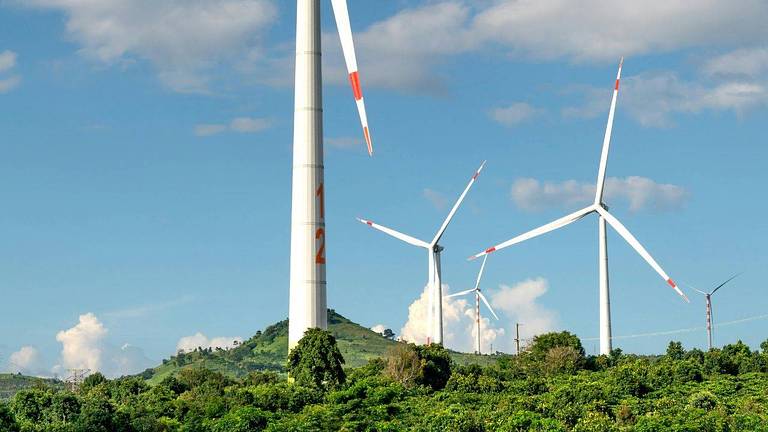
Investments in renewable energy sources NEW OPENING FOR WIND FARMS COMING SOON: 10H GOES AWAY, TIME FOR GOOD LEASE CONTRACTS

However, it is not only access to land itself that is becoming increasingly important, but also the quality of the lease contract. Therefore, the period of legislative work aimed at opening up the wind energy market is a good time to prepare the content of a lease contract securing the possibility to realise a wind farm project.
1. Subject matter and purpose of the lease
First and foremost, it is important to define the essential provisions of the lease contract, i.e. to indicate precisely what area the lease concerns and for what purpose it is concluded. For the investor, it is crucial not only to be able to place a wind turbine on the property itself, but also to secure the right to carry out all necessary preparatory and construction works on the plot, including the possibility to prepare access roads, transmission lines or transformer stations.
2. Duration of the contract and investment phases
Wind power projects are long-term investments and the duration of the obligations under the lease contract must not jeopardise the continuity of such a project. Therefore, the contract should be valid for the entire life cycle of the wind farm - from obtaining the environmental decision to the decommissioning of the installation. Usually, due to the shape of the lease regulations binding in Poland, which recognise a lease contract concluded for a period longer than 30 years as being concluded for an indefinite period, 29-30 years is assumed as the lease period for RES investments. It is also advisable to provide for flexible solutions in case of delays or difficulties in administrative procedures or problems with financing which are beyond the investor's control.
3. Right of sublease and assignment
In order to allow for a possible change in ownership structure (e.g. in the event of a new investor), the contract should provide for the right to assign rights and obligations or to establish a sublease. This provides additional security for the realisation of the investment.
4. Remuneration
Property owners often make their agreement to a lease contract contingent on rent valorisation provisions. From the investor's point of view, however, predictability of costs is important. The rent can be set as a lump sum or as a percentage of revenue. However, it is important that the provisions concerning its valorisation are clear and do not lead to an uncontrolled increase in costs during the term of the contract.
5. Landowner consents and obligations
The landowner should undertake to cooperate in obtaining administrative decisions and not to obstruct the development. The contract should also provide for a prohibition on the sale, subdivision or other disposition of the plot of land that could make the project impossible.
6. Termination of the contract and liability
The contract should clearly specify in which cases it is possible to terminate the contract and what are the consequences of a breach by either party. A lack of precise provisions may result in legal uncertainty and the need to resolve possible disputes through the courts.
Summary
A lease contract is the foundation of a wind farm investment. If well drafted, it gives the investor a real opportunity to implement the project, reduces risks and ensures stability for decades to come. Therefore, it is worth taking care of professional legal support already at the negotiation stage - because a well-written contract means fewer problems in the future and a greater chance of investment success. If you have any questions or concerns regarding draft contracts, please do not hesitate to contact us.